


Blog
10 Questions to Ask Before Buying a Mobile VMS Trailer in New Zealand
Sep
Buying a mobile variable message sign (VMS) trailer should involve more than comparing screen size, trailer size and price.
A mobile VMS trailer used for traffic management can spend years operating alongside live traffic. A well-designed unit can also be an extremely versatile asset, covering everything from temporary traffic management and roadworks through to events, incident management and general traffic information.
The important part is understanding what you are actually buying. Technology changes. Standards and specifications develop. Communications networks change. Better components and designs become available. And sometimes an experienced supplier stops selling a product it has represented for years. There is normally a reason.
Before simply buying the same product from whoever happens to sell it next, it is worth finding out what has changed and what better options may now be available. Here are 10 questions we believe every buyer should ask.
1. What do you actually need the VMS trailer to do?
Start with the application rather than a brand or model. A quality mobile VMS trailer can be used across a wide range of applications, so the aim isn’t to purchase a different trailer for every job.
Instead, consider the range of work you expect it to perform. Where will it operate? How frequently will it move? What messages or graphics will you need? Will it operate unattended? Do you need remote communications? What sort of battery and solar capacity does the application require?
The aim is to invest in equipment with the flexibility and capability to cover the work you expect it to do.
2. What specification or standard does it actually meet?
Be careful with broad statements such as “NZTA compliant.”
Ask the next question: Compliant with what? What specification, standard or requirement is being referred to, and does it actually apply to the product and the application you’re purchasing it for?
Ask for the supporting technical information, too. Depending on the application, display performance, optical performance, message presentation, pixel configuration, trailer configuration and other requirements may all be relevant.
Highway 1 believes product standards should be understood and explained, not reduced to a compliance logo or a sentence in a sales brochure. If a supplier can’t explain what specification they’re claiming compliance with, that’s worth asking more questions about.
3. Are you buying current technology or someone else’s old product range?
This is a question buyers don’t ask often enough. Products and supplier relationships change. If a reputable supplier that has sold, serviced and supported a particular product for years decides to move to something else, don’t automatically assume the old product has suddenly become the best option simply because another company is now selling it.
Ask why the original supplier moved on. Was better technology available? Were there support or supply issues? Have requirements changed? Are better components now available? Is there a product that is simply better suited to today’s New Zealand market?
A change of distributor doesn’t make an older design new technology. At Highway 1, we don’t believe in changing products for the sake of changing them. If something works, is properly supported and remains a good solution, there is no reason to replace it. But equally, we won’t keep selling something simply because we’ve always sold it.
When technology moves forward or we identify a better product, our job is to move forward too. Customers should get the best solution we can offer today, not simply a hand-me-down product range from yesterday.
4. How good is the actual VMS display?
The display is one of the most important components of the system, so don’t judge it only by how bright it looks in a yard. Look at the actual specifications. Consider display size, resolution, viewing angle, brightness control, message capability, graphics capability and performance under different conditions.
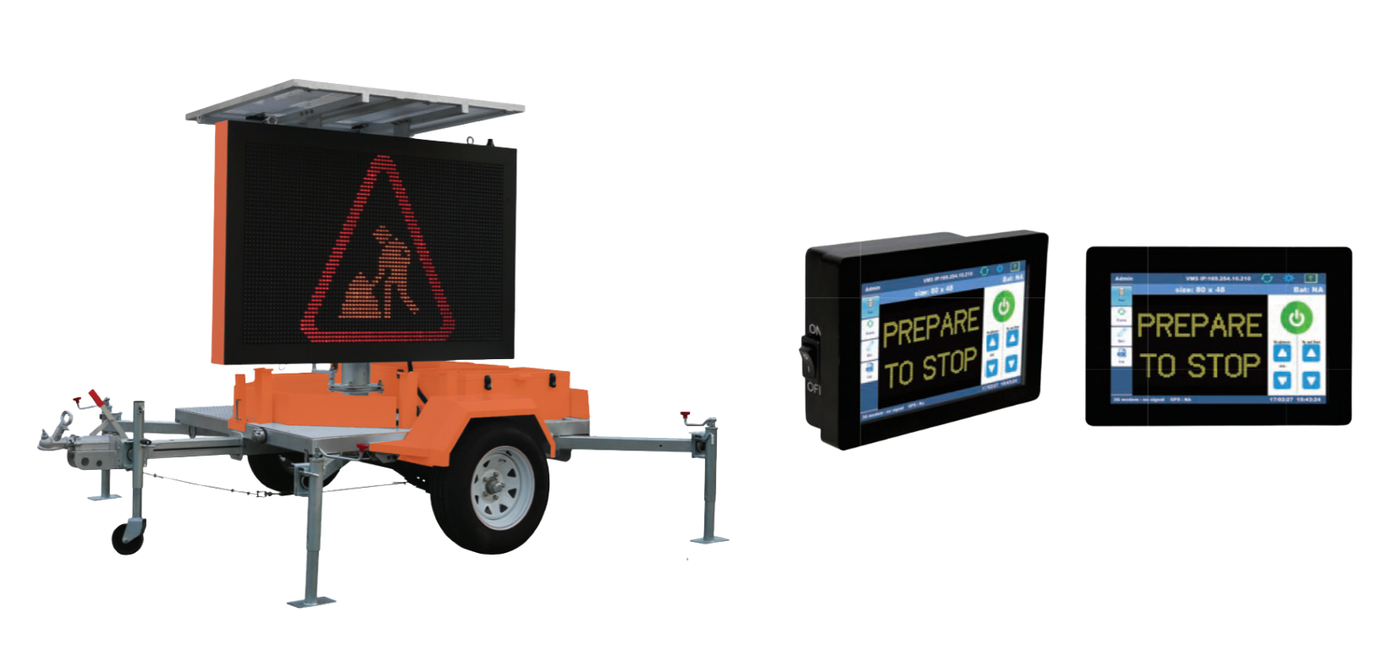
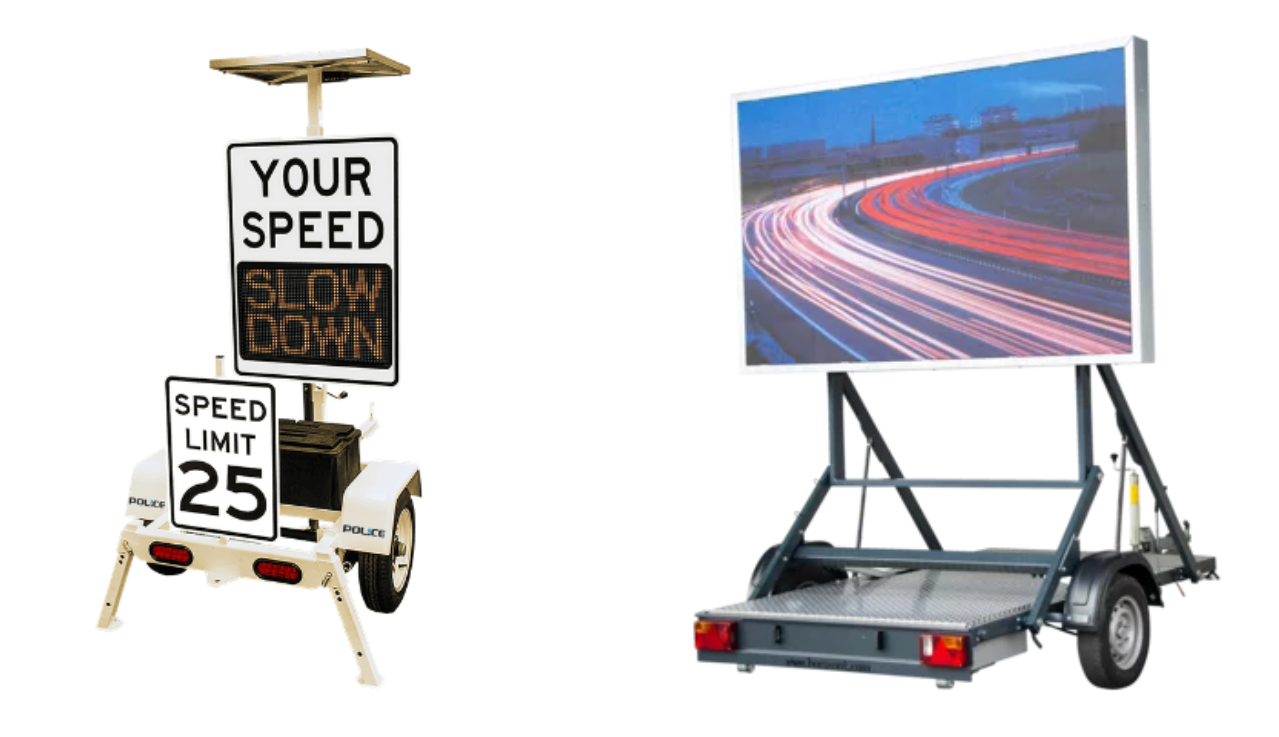
Also understand what is behind the display. Who manufactures the LED components and control system? Are replacement modules available? Can components be replaced individually? Is the technology current and supported? A VMS trailer like our VSL Variable Speed Limit Sign Trailer can potentially have a long working life. You need to think about whether its electronics will remain serviceable during that life.
5. How future-proof are the communications?
Remote control is an extremely useful feature of a modern mobile VMS trailer, particularly when units are operating unattended or spread across multiple sites. But having remote access today doesn’t guarantee remote access for the life of the trailer.
Ask: What communications technology does it use? What happens if cellular coverage is lost? Does the current message remain operating? Can the unit still be controlled locally? Can its modem or communications hardware be upgraded? Who operates and supports the remote platform?
We’ve already seen generations of mobile communications technology disappear. A trailer may remain mechanically serviceable far longer than the modem installed inside it. Make sure you’re buying a system that can move with technology rather than potentially becoming restricted by it.
6. Who is going to support it after you’ve paid for it?
A warranty on paper is only part of product support. Ask where the parts are. Ask who understands the electronics. Ask who can diagnose a fault. Ask whether technicians are available in New Zealand. And importantly, ask what happens after the warranty finishes.
Mobile VMS trailers operate outside in demanding environments. Over their working lives they can require batteries, chargers, solar components, LED modules, controllers, communications equipment and mechanical components. The cheapest trailer on purchase day can become very expensive if it spends weeks sitting in a yard waiting for a component or technical answer from overseas.
Highway 1’s role doesn’t finish when the trailer leaves our yard. Parts, servicing, repairs, training and technical knowledge are an important part of the product.
7. What’s the real whole-of-life cost?
Purchase price is easy to compare. Whole-of-life cost isn’t. Consider battery replacement, communications, servicing, parts availability, downtime, transport for repairs and the ability to refurbish or upgrade the equipment later. Also consider resale and useful working life.
Saving money on the initial purchase doesn’t mean much if the equipment becomes difficult to support several years later. Likewise, paying more doesn’t automatically mean you’re getting a better product. Value comes from buying the right equipment, with the right support, for a sensible working life.
8. Is the battery and solar system realistic for New Zealand conditions?
“Solar powered” doesn’t mean unlimited power. Solar performance depends on panel capacity, battery capacity, power consumption, location, orientation, season, shading and weather. A system performing well through summer may experience very different conditions through a New Zealand winter or during an extended period of poor weather.
Ask about realistic battery capacity and charging performance rather than relying on an ideal-condition figure. Also ask what happens if the batteries become depleted and what charging options are available.
The complete power system needs to suit the application.
9. How practical is it to transport, deploy and maintain?
A VMS trailer isn’t operated from a brochure. Someone has to tow it, position it, deploy it, use it and eventually service it.
Consider trailer weight, towing requirements, setup and pack-down, stabilisation, display operation, solar-panel deployment, controls and maintenance access. If the trailer is moved regularly, small design differences can become very important over hundreds of deployments.
Good equipment design should make the operator’s job simpler and minimise unnecessary time working alongside live traffic.
10. Who are you actually buying from?
Don’t only research the brand printed on the VMS. Research the company standing behind it. How long have they been involved with the equipment? Do they understand how it works? Can they explain the applicable specifications? Do they stock parts? Can they service it? Can they train your staff? Will they still support it when the next generation of equipment arrives?
And if you’ve seen the same product previously supplied by another established company, ask why that company no longer sells it. There may be a perfectly straightforward commercial reason. There may also be a technical, support, supply or product-development reason that is very relevant to your purchasing decision.
Do your homework before investing in equipment you may own for the next decade.
Don’t Buy Yesterday’s Solution Just Because It Has a New Supplier
A mobile VMS trailer can be a long-term investment, and a good unit should remain a useful and versatile asset for many years. That’s exactly why purchasing decisions shouldn’t be based solely on price, a familiar-looking product or who happens to hold an agency today.
Look at the technology. Look at the specifications. Look at the support. Look at the parts availability. Look at what has changed in the market. And if an experienced supplier has moved away from a product, ask them why.
At Highway 1, we don’t chop and change products simply to have something new to sell. We continually review what we supply because technology develops, standards and industry requirements evolve, and better solutions become available.
Sometimes that means continuing with a proven product. Sometimes it means improving it. And sometimes it means moving on to something better. Our customers shouldn’t be left buying yesterday’s technology when there is a superior solution available today.
If you’re considering purchasing a mobile VMS trailer, replacing older equipment or comparing different systems, talk to Highway 1. Email info@highway1.co.nz or call 0800 175 571. We’ll explain the differences, the technology and the options so you can make an informed decision based on what you’re actually getting, not just the name on the brochure.
