


Blog
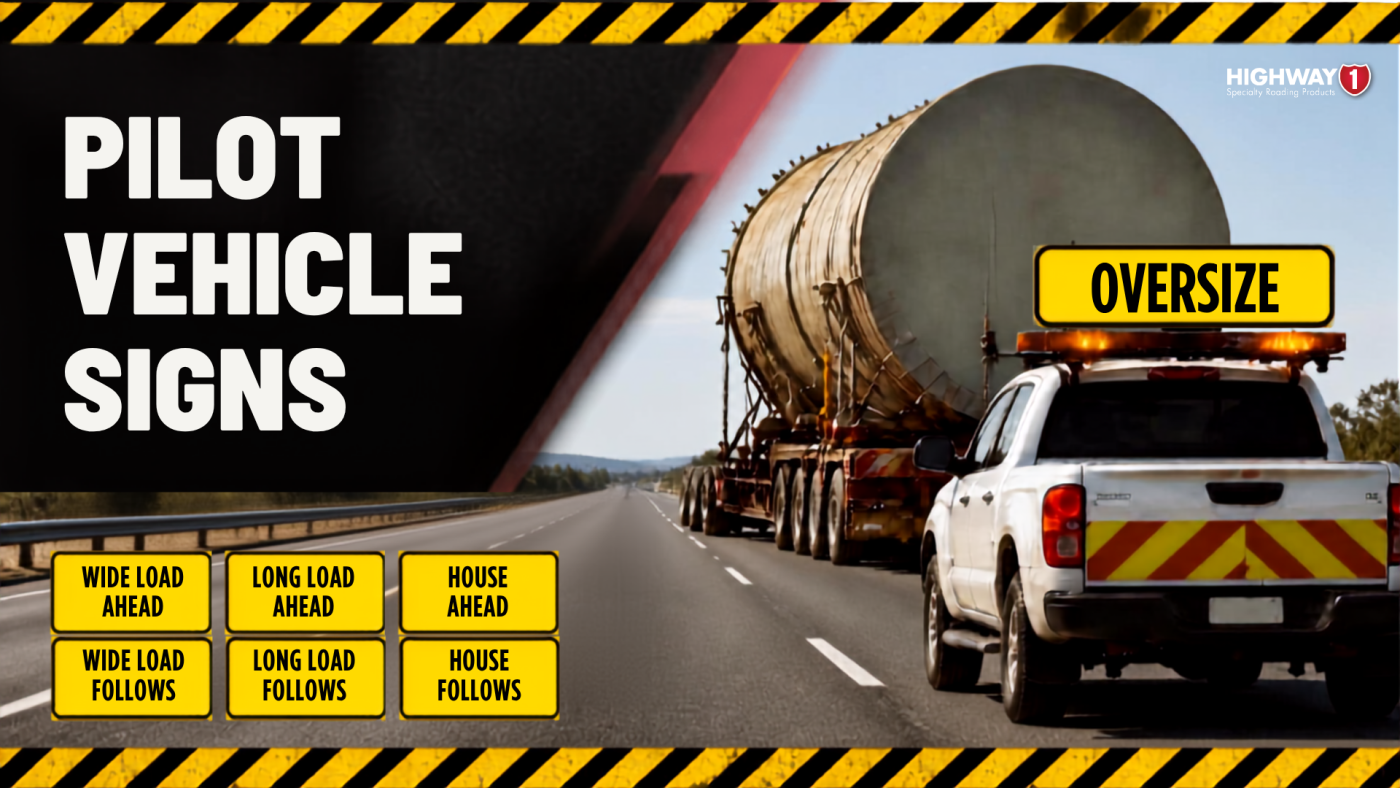
7 Pilot Vehicle Signs Every Transport Operator Should Know
Aug
If you’re running pilot vehicles, managing transport for an oversize job, or setting up the traffic management around one, you already know these pilot vehicle signs matter. What’s less obvious sometimes is which one goes where, especially when a job’s moving fast and someone grabs the wrong sign off the truck.
This isn’t just good practice, either. Under NZTA’s Vehicle Dimensions and Mass Rule, an OVERSIZE sign can only be displayed when the Rule actually requires it, and overdimension loads above certain width thresholds need a Waka Kotahi-approved pilot depending on width and travel conditions. Getting the signage wrong isn’t just a visibility issue on the day; it can put the whole escort offside with what NZTA expects.
Why the Right Sign in the Right Spot Matters
An oversize load changes how the traffic around it needs to behave, but only if drivers get enough warning to actually change their behaviour. A load sitting across two lanes, swinging wide through a roundabout, or needing extra time to clear an intersection isn’t obvious from a distance until a sign tells drivers what’s coming.
That’s the whole function of Ahead and Follows signage: one pilot vehicle warns the traffic approaching from the front, another (or the load itself) warns the traffic building up from behind, and the load travels through the middle with both directions already briefed. Get a sign wrong, or leave one off, and that warning gap opens back up.
7 Pilot Vehicle Signs
There are seven signs in regular use, each doing a specific job for a specific position in the convoy. Here’s a clear rundown of what each one means and where it belongs, useful as a refresher for your own crew or as a quick reference for new pilot drivers coming onto a job.
1. Wide Load Ahead
This sign is often mounted on the lead pilot vehicle, facing forward. Wide Load Ahead is the first warning oncoming and forward traffic gets that a wide load is following behind the pilot car, giving drivers time to find a safe spot before the load itself arrives.
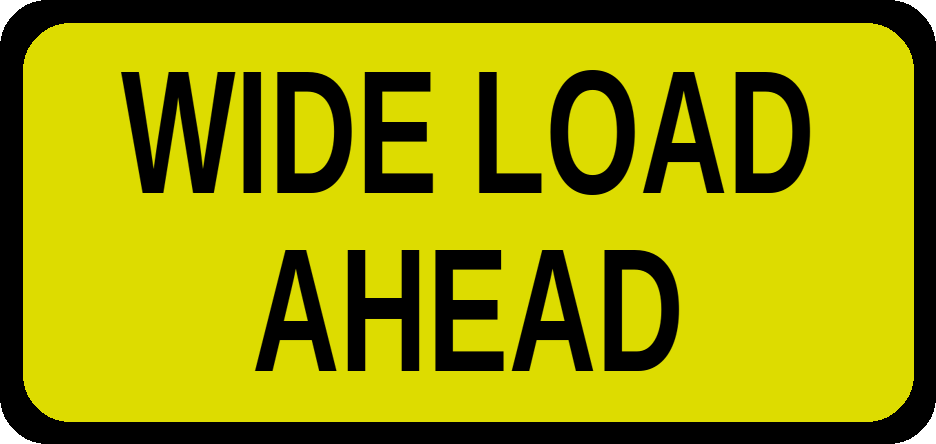
Typical jobs: Wide machinery, modular buildings, pre-fabricated structures; anything exceeding standard width.
2. Wide Load Follows
This sign is often fitted to the rear of the load or a trailing escort vehicle. Wide Load Follows tells traffic building up from behind not to attempt an overtake until there’s a genuinely wide, clear stretch of road to do it in.
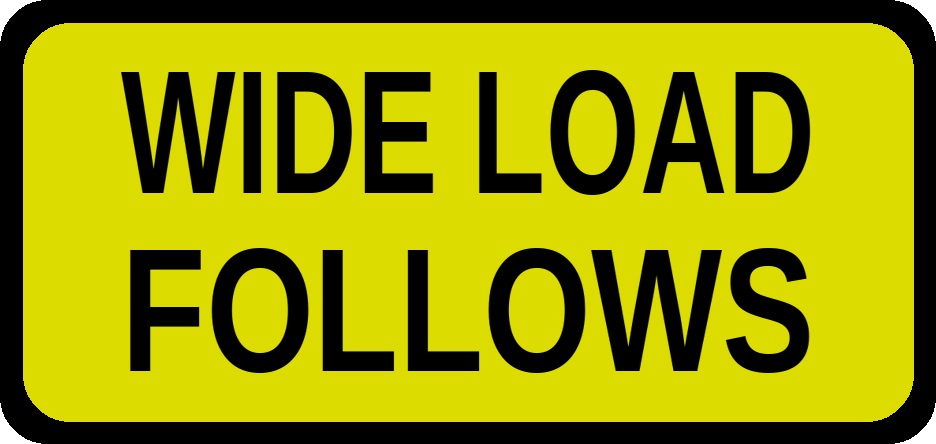
Typical jobs: Run as a pair with Wide Load Ahead, covering both directions on the same escort.
3. Long Load Ahead
Length and width create different problems on the road. A long load needs more time and space to clear a corner or intersection than its front end suggests, so the Long Load Ahead sign on the lead pilot vehicle flags that to oncoming traffic early.
Typical jobs: Structural beams, wind turbine components, and long precast concrete sections.
4. Long Load Follows
This is the rear-facing counterpart of the Long Load Ahead, fitted to the load or a trailing vehicle. The Long Load Follows sign tells following traffic that the vehicle ahead needs more room and time through bends and turns than its length alone might suggest.

Typical jobs: The rear half of the same over-length escort as Long Load Ahead.
5. House Ahead
A relocated house is rarely just wide or just long. It’s usually both, plus tall, all at once. That’s reason enough for dedicated signage rather than a generic oversize warning. Carried on the lead pilot vehicle, the House Ahead sign tells approaching drivers exactly what’s coming, no ambiguity required.
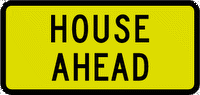
Typical jobs: Full house and building relocations, common enough on New Zealand roads that specific signage genuinely earns its place.
6. House Follows
This is the rear-facing partner to House Ahead, carried on a trailing escort vehicle. The House Follows sign tells drivers behind the load that they’re following a house transport specifically, so they can plan for a longer, wider convoy rather than a standard oversize escort.

Typical jobs: Completes the escort setup alongside House Ahead.
7. Oversize
This is a more general marker, usually fixed directly to the load or vehicle rather than carried by a pilot vehicle. The Oversize sign flags that the vehicle exceeds standard dimension limits without specifying how. Typically seen alongside the more specific Ahead and Follows signage, not instead of it.

Typical jobs: An additional marker on the load or vehicle itself, supplementing the pilot vehicle signage.
Ahead vs. Follows: The Pattern to Remember
Here’s how you can apply ahead vs. follows across every category:
- Ahead faces forward, mounted on the lead pilot vehicle, for traffic about to meet the load head-on.
- Follows faces backward, mounted on the load or a trailing vehicle, for traffic approaching from behind.
Whether wide, long, or house, that logic doesn’t change. Get your crew comfortable with this pattern and sign selection stops being something to double-check every time.
Sourcing the Right Signage
An escort is only as reliable as its weakest sign. Highway 1 carries the full range of oversize load signage (with yellow/green high visibility background, and durable aluminium build) along with the pilot vehicle and traffic management gear that rounds out the job, so every vehicle in your convoy is carrying exactly what it should. Order online or send enquiries via info@highway1.co.nz.
